


 Verified Buyer

Key Takeaways
- The tyre pressure for Peugeot 3008 models ranges from 31–36 PSI (2.1–2.5 BAR) depending on your specific wheel and tyre configuration.
- Most common 18-inch configurations require 31–32 PSI (2.1–2.2 BAR) uniformly across front and rear tyres.
- Standard 17-inch and wider 18-inch setups require 36 PSI (2.5 BAR) for optimal performance.
- Checking your 3008's tyre pressure monthly improves fuel efficiency, extends tyre lifespan, and enhances safety across varied driving conditions.
- Ordiniq's AutoPump bridges the gap between Peugeot's specifications and inaccurate forecourt pumps, offering digital precision.
Peugeot 3008 Tyre Pressure: Verified Specifications
The correct tyre pressure for a Peugeot 3008 typically ranges from 31 PSI to 36 PSI (2.1 to 2.5 BAR), depending on your specific wheel size and load requirements. Most standard 18-inch tyre configurations require 32 PSI (2.2 BAR) for both front and rear wheels, while standard 17-inch or wider 18-inch setups often require 36 PSI (2.5 BAR). Always consult the placard located on the driver’s side door pillar to confirm the exact specifications for your vehicle's trim.
To ensure safety and fuel efficiency, these measurements must be taken as "cold" tyre pressures, meaning the vehicle has been stationary for at least three hours. Checking pressures when tyres are warm from driving can result in inaccurate readings, as heat causes the internal air to expand, temporarily increasing the pressure reading. Maintaining these verified levels monthly will optimize handling, extend the lifespan of your tyres, and prevent premature wear on the tread centre.
|
Ordiniq AutoPump: Your Pocket-Sized Roadside Hero Join 10,000+ Drivers Who Never Worry About Flat Tyres Again Why Ordiniq’s AutoPump Is Essential
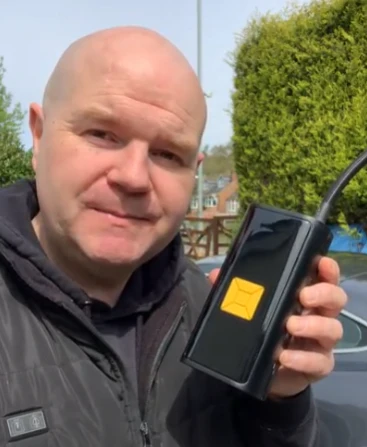
What Customers Say ★★★★★ "I was at first very skeptical about using a new product like the AutoPump with my 2018 Ford Focus. But after getting a flat tyre due to a nail, it inflated my tyre quickly and allowed me to get to a garage and have the tyre repaired. Definitely a thumbs up from me." - Gregg D. Bristol, UK Try It Risk-Free for 90 Days Experience the AutoPump with zero worries. If it doesn't save you from a tyre emergency within 90 days, we'll refund your purchase with no questions asked. FREE BONUSES: Tyre Pressure Monitoring Caps (£19.99 Value) + Tyre Safety eBook (£10 Value) + FREE Shipping Across the UK via Royal Mail and Evri *Ordiniq also offers Handheld Wired Car Vacuum Cleaner and Tyre Repair Kit, which are great extras to keep in your boot for added peace of mind. |
Understanding Pressure Measurement Systems: PSI, BAR, and kPa

Three measurement systems express identical pressure values—familiarity with each prevents confusion across different equipment types and regional standards. (Image courtesy of Peugeot)
PSI (Pounds per Square Inch)
PSI represents the most commonly used measurement for tyre pressure in the United Kingdom and the United States. It measures the pounds of force exerted on one square inch of surface.
The Peugeot 3008 requires between 31–36 PSI, depending on configuration. This imperial measurement appears on most tyre pressure gauges sold in these regions, making it convenient for most drivers.
BAR Measurement System
BAR is a metric pressure unit commonly used throughout Europe, including France, where Peugeot is manufactured. One BAR roughly equals the atmospheric pressure at sea level (approximately 14.5 PSI).
For the Peugeot 3008, typical recommendations range from 2.1–2.5 BAR depending on configuration. European-manufactured pressure gauges often display BAR as their primary measurement, particularly convenient if you're travelling in continental Europe.
Kilopascals (kPa)
Kilopascals represent another metric unit commonly used in countries like Australia and Canada. The 3008's requirements convert to approximately 214–248 kPa across different configurations. Modern digital tyre pressure gauges often provide readings in multiple units, eliminating conversion concerns.
Quick Conversion Reference
|
PSI |
BAR |
kPa |
Application |
|
31 |
2.1 |
214 |
Standard 18" (some variants) |
|
32 |
2.2 |
221 |
Standard 18" (most common) |
|
36 |
2.5 |
248 |
Sport 18" and 17" configurations |
Verified Peugeot 3008 Pressure Specifications
|
Tyre Size |
Front Pressure |
Rear Pressure |
Configuration |
|
225/55/R18 V 102 |
31 PSI / 2.1 BAR |
31 PSI / 2.1 BAR |
Standard 18" (variant A) |
|
225/55/R18 V 102 |
32 PSI / 2.2 BAR |
32 PSI / 2.2 BAR |
Standard 18" (variant B) |
|
225/55/R18 V 98 |
32 PSI / 2.2 BAR |
32 PSI / 2.2 BAR |
Alternative 18" fitment |
|
235/45/R18 W 98 |
36 PSI / 2.5 BAR |
36 PSI / 2.5 BAR |
Wider 18" configuration |
|
225/50/R17 H 94 |
36 PSI / 2.5 BAR |
36 PSI / 2.5 BAR |
Standard 17" wheels |
Locating Your 3008's Exact Pressure Specifications

Multiple manufacturer-provided sources contain your specific requirements—the door jamb placard provides the most reliable configuration-specific reference. (Image courtesy of Peugeot)
Reading Your Tyre Placard
The placard displays several key pieces of information. The placard displays recommended pressures for both front and rear tyres—for most 3008 configurations, these values are identical.
You may also see different pressure recommendations for light and heavy loads, or for sustained high-speed driving.
Pay particular attention to tyre size information on the placard, as different sizes require different pressures. The 5 PSI range across 3008 configurations means using incorrect specifications could significantly impact handling, fuel efficiency, and tyre wear patterns.
For instance, applying 36 PSI to a configuration requiring 31 PSI would create the overinflation problems discussed below.
Owner's Manual Reference
Your Peugeot 3008 owner's manual contains comprehensive tyre pressure information in the technical specifications section. This resource proves particularly valuable if your door jamb placard has become illegible or if you're uncertain which specification applies to your specific configuration.
Digital versions of owner's manuals are typically available through Peugeot's website if your physical copy has been misplaced.
Moving Beyond Approximation With Ordiniq

At Ordiniq, we built the AutoPump around the principle that measurement equipment should resolve uncertainty rather than introducing additional layers of it.
Correct tyre pressure is vital for safety and fuel economy, not just a smooth ride. Standard service station pumps are often poorly calibrated, making it difficult to achieve the specific 31–36 PSI range. The Ordiniq AutoPump solves this with digital precision, providing the exact measurements needed to keep your vehicle performing as intended.
Technical Features
- The AutoPump is designed to be a practical tool for consistent vehicle maintenance:
- Precision Control: High-accuracy sensors eliminate the guesswork of manual gauges.
- Dual Charging: Powered via internal battery with USB-C and 12V vehicle port options.
- High-Pressure Range: A 150 PSI capacity allows it to handle everything from car tyres to high-pressure bicycle tubes and sports equipment.
Rather than relying on hit-or-miss forecourt equipment, this tool provides a reliable, professional-grade alternative you can keep in the boot. It is currently available with a 90-day trial period and includes a set of safety accessories.
| Learn more about the Ordiniq's AutoPump → |
Frequently Asked Questions (FAQs)
Where is the tyre pressure sticker located in the Peugeot 3008?
In most Peugeot 3008 models, the tyre pressure sticker (or placard) is located on the driver's side door jamb—specifically on the B-pillar that becomes visible when you open the driver's door. If you cannot locate it there, check inside the fuel filler flap or in the glove compartment. Alternatively, your owner's manual always contains correct tyre pressure information for your specific model and year.
How often should I check the tyre pressure in my Peugeot 3008?
Manufacturers recommend checking your Peugeot 3008's tyre pressure at least once monthly and before any extended journeys. This regular schedule helps ensure your tyres maintain optimal performance and safety characteristics.
Does the Peugeot 3008 have a tyre pressure monitoring system?
Yes, modern Peugeot 3008 models come equipped with Tyre Pressure Monitoring System (TPMS) as standard equipment. This system continuously monitors pressure in all four tyres and alerts you if any tyre falls significantly below recommended pressure. The alert typically appears as an illuminated warning light on your dashboard, often resembling a tyre cross-section with an exclamation point.
What happens if I inflate my Peugeot 3008 tyres above the recommended pressure?
Overinflating your Peugeot 3008's tyres creates several problems. The most immediate effect is harsher ride quality as stiffer tyres absorb fewer road imperfections. Your vehicle transmits more road noise and vibrations into the cabin, reducing comfort for all occupants—particularly noticeable in a family crossover where passenger comfort matters. More concerning is the effect on tyre wear and handling. Overinflated tyres develop excessive wear in the tread centre because this area bulges out and bears more of the vehicle's weight.
How does Ordiniq's AutoPump specifically help Peugeot 3008 owners with varying pressure requirements?
The Ordiniq AutoPump addresses a specific challenge for 3008 owners: the precise pressure variations across different wheel configurations. The AutoPump's half-PSI accuracy eliminates ambiguity, ensuring you hit your 32 PSI target precisely.
*Note: Pricing and/or product availability mentioned in this post are subject to change. Please check our website for current pricing and stock information before making a purchase.


